
News
Ceremonial presentation and conference: “The historic return of the head of St James the Elder”
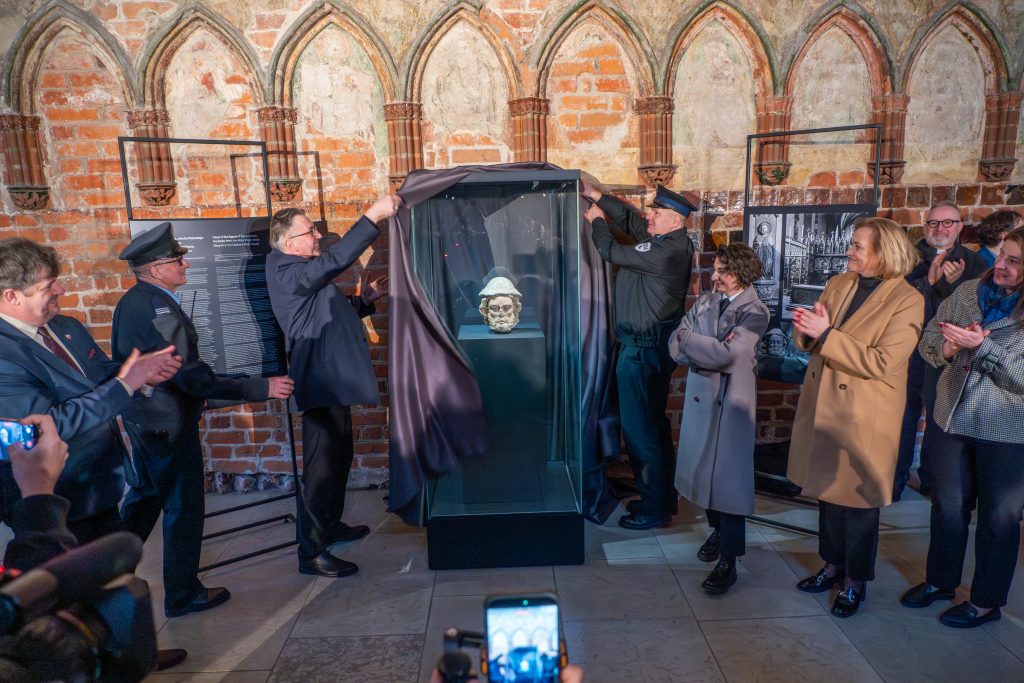
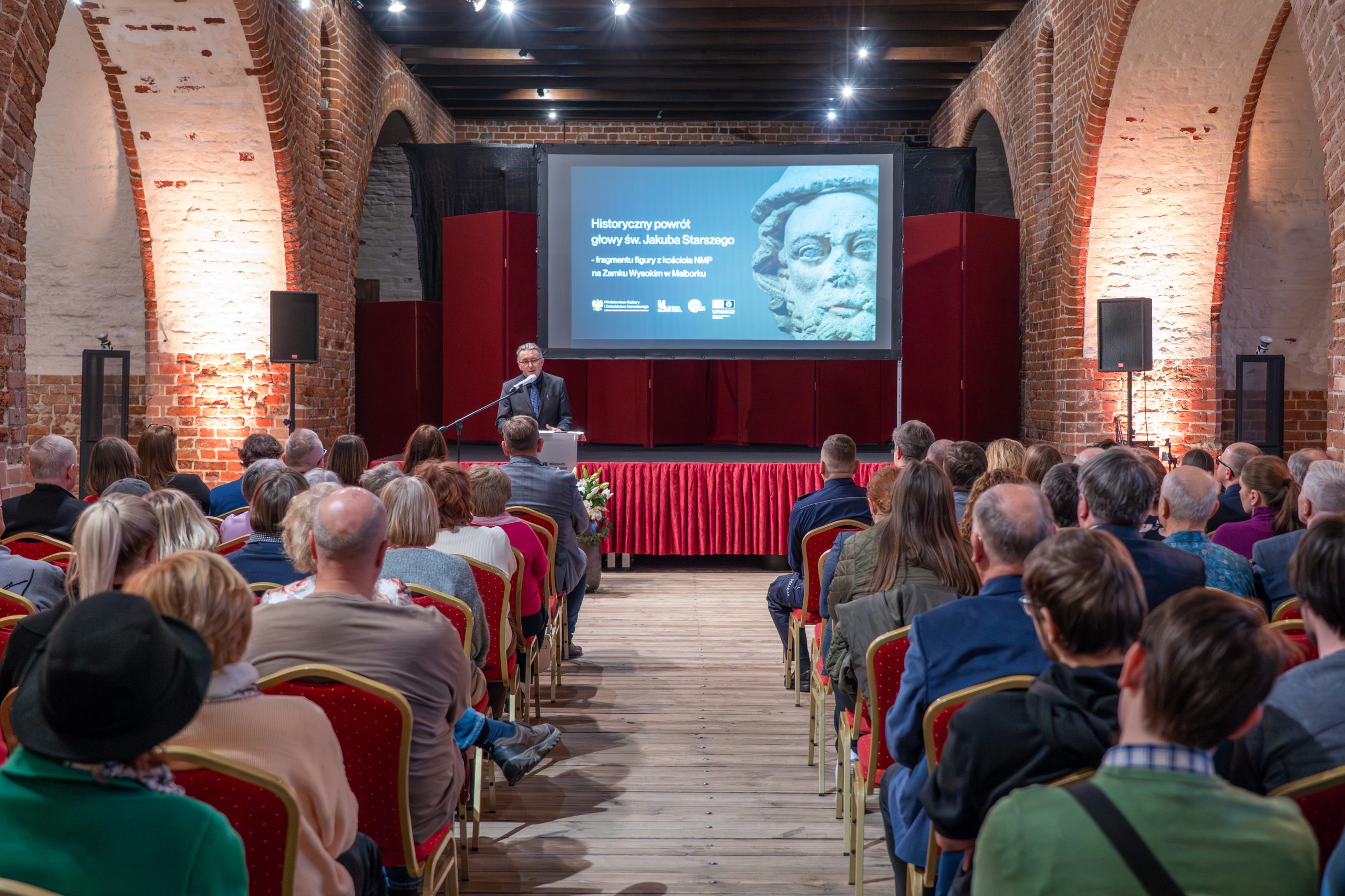
It was an important day for the Malbork Castle Museum. The head of the statue of St James, which had gone missing after the war, has returned to the church at the High Castle after many years of efforts. For the Museum, this is a unique event that required a festive setting. On 25.03.2026, guests crowded into the castle to witness this celebratory return in person.
The meeting was opened by Dr Janusz Trupinda, Director of the Malbork Castle Museum, who welcomed the guests, including Ms Anna Olkowska-Jacyno, Deputy Governor of the Pomeranian Province, Ms Elżbieta Rogowska, Deputy Director of the Department of Cultural Heritage at the Ministry of Culture and National Heritage, Mr Marek Charzewski, Mayor of Malbork, and Mr Paweł Cywiński, Plenipotentiary of the Minister of Agriculture and Rural Development for the Vistula Fens.
Why do we celebrate the return of every single item of the castle’s former furnishings from the Malbork Castle collection? With this question, the Director introduced the mission of the Malbork Castle Museum, which is to tell the story of three castles: those in Malbork, Kwidzyn and Sztum. The museum’s activities stem from this mission – nurturing the memory of different historical periods and, consequently, conducting research or searching for lost monuments. One such artefact is the head of the statue of St James, which, together with the figure’s torso, remained at the castle from the Middle Ages until the post-war years, when it went missing. ‘The whole history of the castle is contained in one small artefact,’ concluded the Director.
Visitors who came to the event were able to learn more about the theme of the apostolic college. In his subsequent presentation, Dr Michał Kurkowski, Curator of the Department of Art and Arts and Crafts at the Malbork Castle Museum, outlined not only the composition of the Apostolic College, but also the materials used to create the sculptures and the techniques employed in their production. ‘The twelve apostles in this symbolic structure should be combined with the number of twelve gates adorned with precious stones in the image of the Heavenly Jerusalem,’ explained dr Kurkowski.
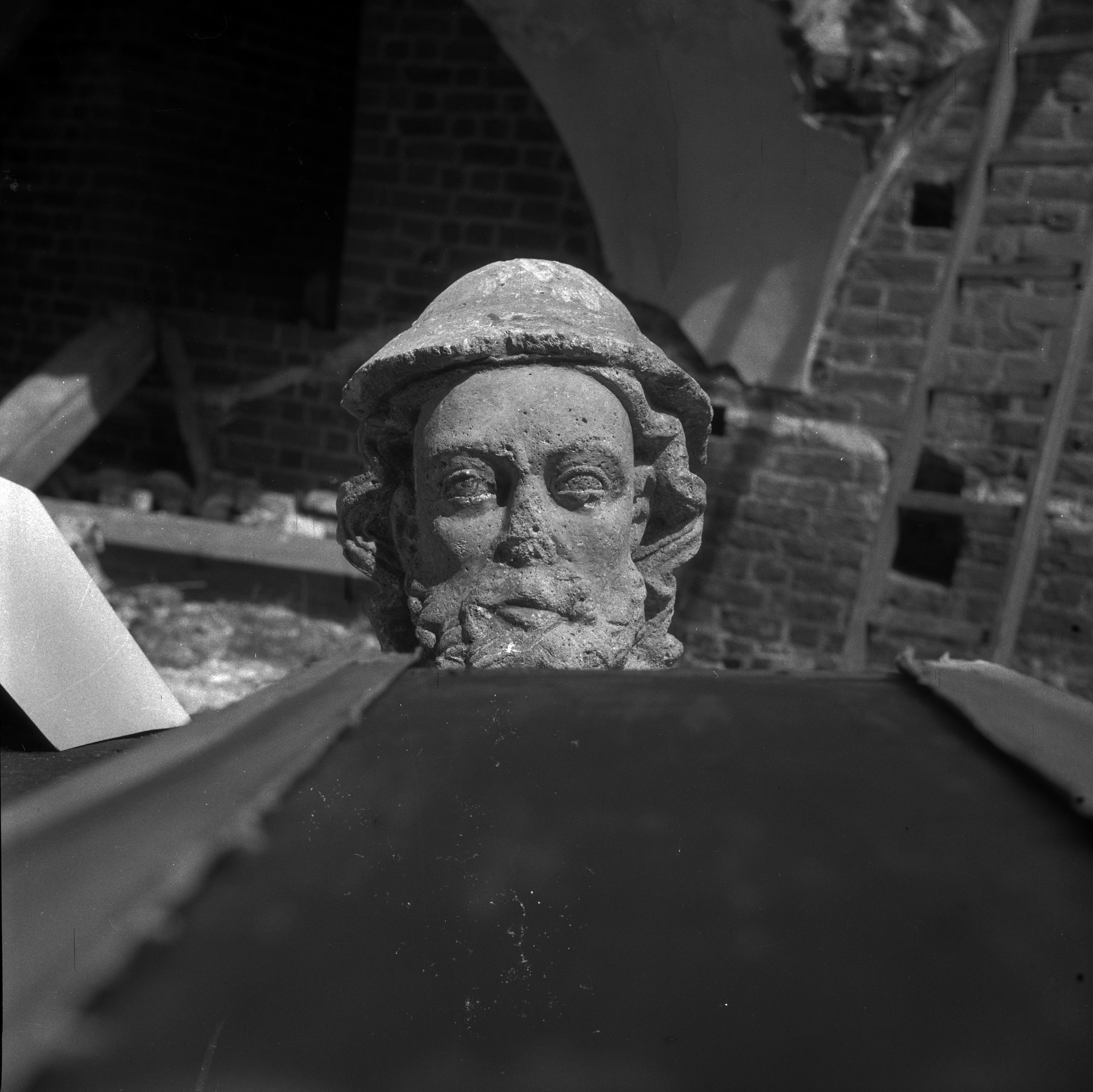
The next speaker was Ms Aleksandra Siuciak, project coordinator for the ‘Losses’ project at Malbork Castle Museum, who spoke about the damage caused by artillery shelling towards the end of the Second World War, in 1945. Mrs Aleksandra discussed the clearance of rubble from the castle grounds, as well as the work carried out by the architect Maciej Kilarski, who sorted the excavated historical elements and architectural details. It was during these works that the architect took a photograph of the head of the statue of the Apostle James the Elder – this was the last photograph of the head, documenting its presence in the castle. ‘Perhaps the small size of this element of the figure (29×23 cm) encouraged its removal from the castle, for as early as 1958, in unexplained circumstances, the artefact found its way to an auction house in Munich. From there, it was transferred to the Germanisches Nationalmuseum in Nuremberg. The torso of the statue remained in Malbork.’ – Mrs Aleksandra Siuciak said. The presentation went on to show the subsequent fate of the figure’s head with the finale being its recovery, with the support of the Cultural Property Restitution Unit of the Cultural Heritage Department at the Ministry of Culture and National Heritage.
Mrs Anna Olkowska-Jacyno, Deputy Governor of Pomerania, also spoke, emphasising the uniqueness of the event. ‘We have not only recovered the artwork today. We regained our faith today that you have to fight until the end. Justice, even historical justice, will eventually come,’ – said Mrs Pomeranian Deputy Governor.
The last guest to speak was Mr Marek Charzewski, Mayor of Malbork, who expressed his joy and gratitude for the return of the artefact to Malbork. Finally, the Mayor referred to statements made by people who say: ‘I have been to the castle so many times and seen everything’ – these words, in light of the current event, have become obsolete. The head of the statue has returned and the Mayor expressed his hope for further success in recovering the lost heritage.
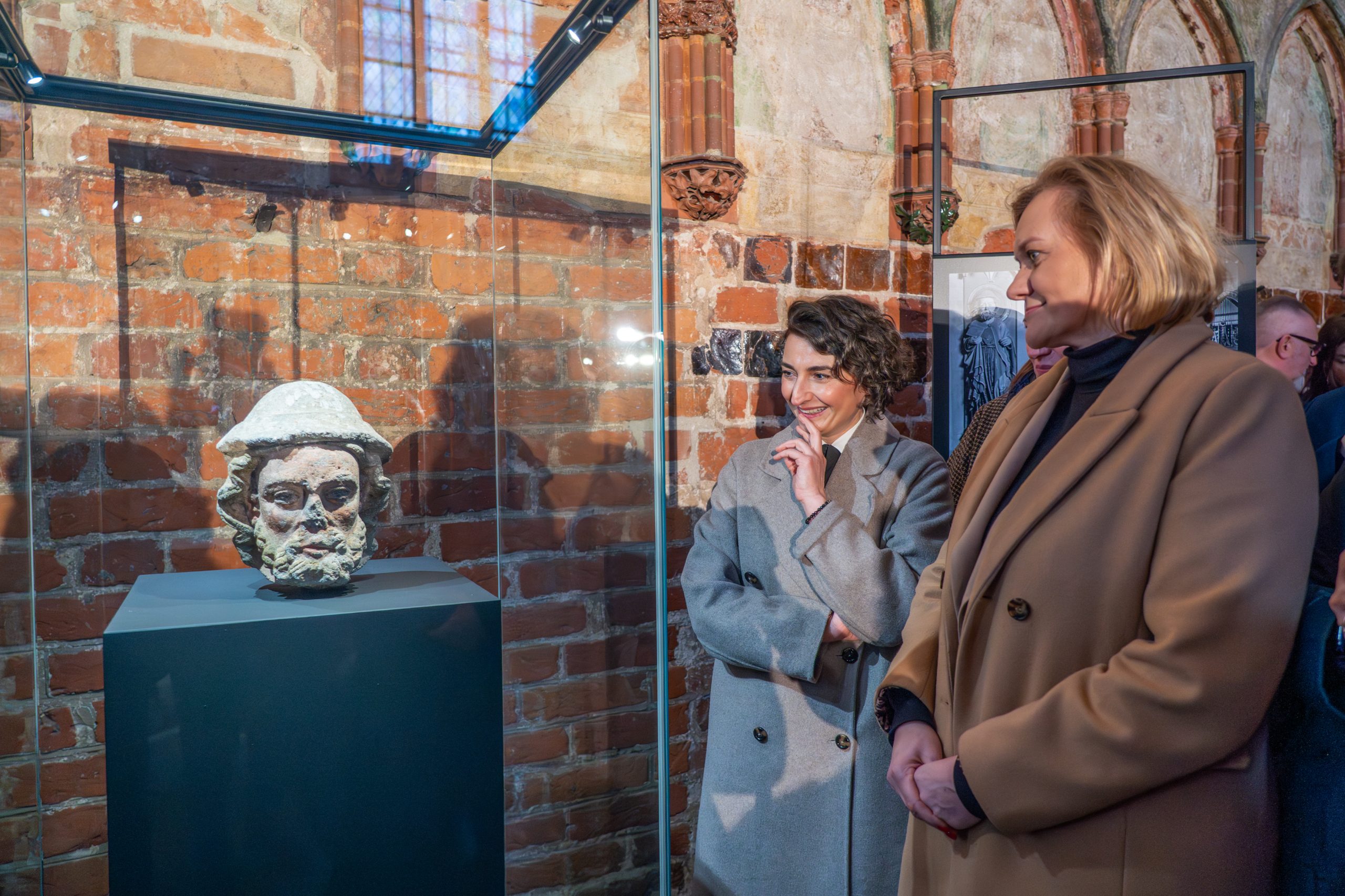
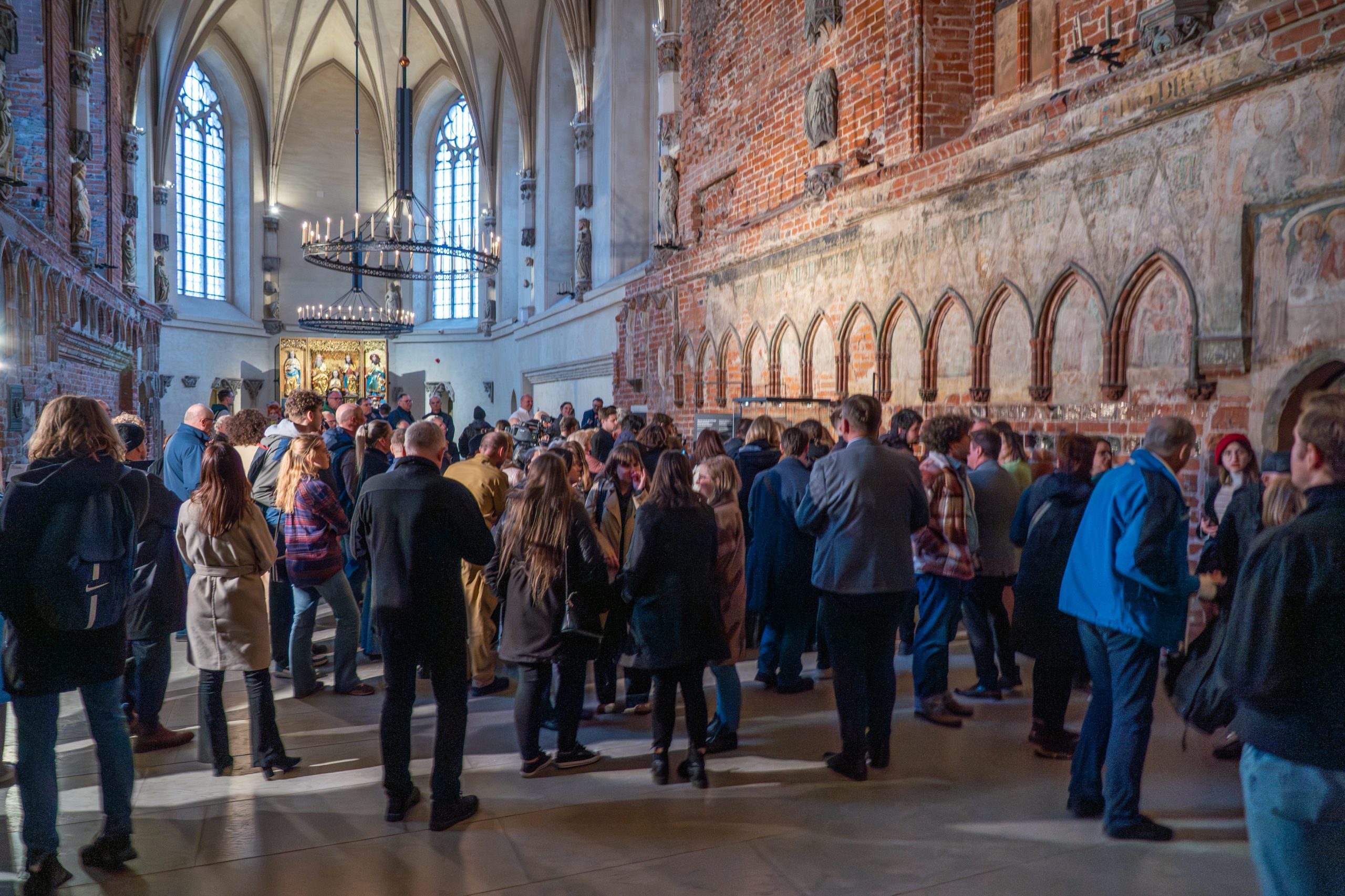
After this part of the meeting, the Director invited the guests to the High Castle, where the unveiling of the statue’s head took place in the church. It is in a display case, below the rest of the statue, as the head is on deposit at the Museum. The Museum is making efforts to ensure that the head of the statue eventually becomes the property of the Museum and is returned to its place, i.e. to the torso of St James.
About the statue
The statue of the Apostle James the Elder belongs to the Apostle’s College – a group of sculptures from the decoration of the Church of the Blessed Virgin Mary in the High Castle in Malbork. It was originally set on the sixth console of the south wall of the sanctuary, counting from the east, forming part of a wider iconographic programme of decoration for this interior. The colonnade consisted of almost three-dimensional figures placed on consoles under architectural canopies.
Dating from around 1340, the statue of the saint was positioned facing the interior of the church. His bearded, oval face, with well-defined cheekbones and a high forehead, was framed by twisted locks of hair poking out from under a distinctive hubcap-type hat. The apostle was dressed in a long undershirt with a high-tie belt and a voluminous cloak fastened at the neck. The hem of the coat was luxuriantly draped in folds running down the sides of the figure. There were bare feet sticking out from under the robes. In the palm of his right hand, bent at the elbow, the apostle held a book.
War damage in the Church of the Blessed Virgin Mary in the High Castle
As a result of the warfare in 1945, Malbork Castle suffered the most damage, especially its eastern part. During the Red Army’s artillery shelling, the castle church and St Anne’s Chapel suffered the most, with the main tower collapsing. At that time, the eastern part of the church, including the vault and an eight-metre-high mosaic figure of the Madonna and Child, slid into the castle moat. Many structural elements and architectural details, including the artistic elements, were destroyed, amongst them the sculptural cycle of the Apostolic College, which at the time lay in heaps of rubble both inside the church and on the adjacent grounds.
Clearing the rubble from the Holy Mary Church at the High Castle
After the end of hostilities, the church remained inaccessible for nearly five years. The first cleaning work in the interior was undertaken when the castle was under the protection of the Polish Army. Branch No. 1 of the Museum of the Polish Army in Warsaw was established on the castle grounds. During the removal of rubble from the church between 12 and 16 January 1950, numerous artefacts from the church’s former furnishings were discovered. Among other things, several statues of evangelists, angel heads and fragments of the image of Our Lady of Humility were pulled from the rubble during these days.
When the Malbork branch of the Polish Tourist and Sightseeing Society (PTTK) took over the management of the castle in 1957, work on restoring the church and St Anne’s Chapel gained momentum. In the summer of that year, on behalf of the Provincial Conservator in Gdańsk, supervision of the works was entrusted to inż. arch. Maciej Kilarski, who sorted the excavated historic elements and architectural details. As M. Kilarski writes, at that time ‘considerable amounts of rubble were cleared from the base of St Anne’s Chapel, from inside the chapel and from both adjacent porches – particularly on the south side, where the pile of rubble reached the level of the cloisters’. Some of the historical artefacts unearthed at that time were displayed in a temporary exhibition entitled ‘A display of architectural fragments from St Anne’s Chapel and the Castle Church of the Blessed Virgin Mary’. It was displayed in the corridor adjacent to the guest chambers in the east wing of the Middle Castle.
The missing head of the statue
The last debris removal work was carried out in late 1957 and early 1958. The documentation from that period, compiled in 1960, contains valuable information as well as photographs of the excavated artefacts, including parts of the statue of St James the Elder. There is an interesting annotation – which proved to be significant for the fate of this monument – that the head of this sculpture remains ‘for the time being missing’. As early as in 1958, in unexplained circumstances, most likely as a result of theft, the artefact was transferred to an auction house in Munich, from where it ended up in the collection of the Germanisches Nationalmuseum in Nuremberg. This monument was first mentioned in the literature in 1965 in the catalogue of this museum’s collection, Die Bildwerke in Stein, Holz, Ton und Elfenbein bis um 1450, by Heinz Stafski, with a note that it is a deposit of the Federal Republic of Germany. In the years that followed, the artefact was displayed at two major international exhibitions, where it was shown alongside the torso of the same figure, which remains in the collection of Malbork Castle Museum.
Return to Malbork
Discussions about the possible return of the head to Malbork have been taking place since the 1990s, but they have come to nothing. It was not until the activities carried out by the Loss Project that the monument was added to the National List of Monuments Stolen or Illegally Exported Abroad in December 2022. Thanks to the actions of the Ministry of Culture and National Heritage, the head of the statue of the Apostle James the Elder returned to Poland in December 2025 and was transferred to the collection of the Malbork Castle Museum.
The formal handover of the figure’s head took place on 03.12.2025 inside the Royal Castle in Warsaw. It was a major diplomatic success, marking the completion of many years of efforts to recover further cultural artefacts that had once been lost.
Head of the statue of the Apostle James the Elder from the apostolic college of the Church of the Blessed Virgin Mary at the High Castle in Malbork
-Prussia, Malbork, workshop unknown, ca. 1340
-art stone (screed gypsum); casting in mould, stonework, polychroming, gilding
-depository of the Treasury, ref. R/000076
Tickets
Buy tickets online
Opening Hours
- Mon:9:00 - 16:00
Exhibitions
- Tue - Sun:9:00 - 15:00
Contact
Tourist Information
- +48 55 647 08 00
- +48 55 647 09 02
- +48 55 647 09 78